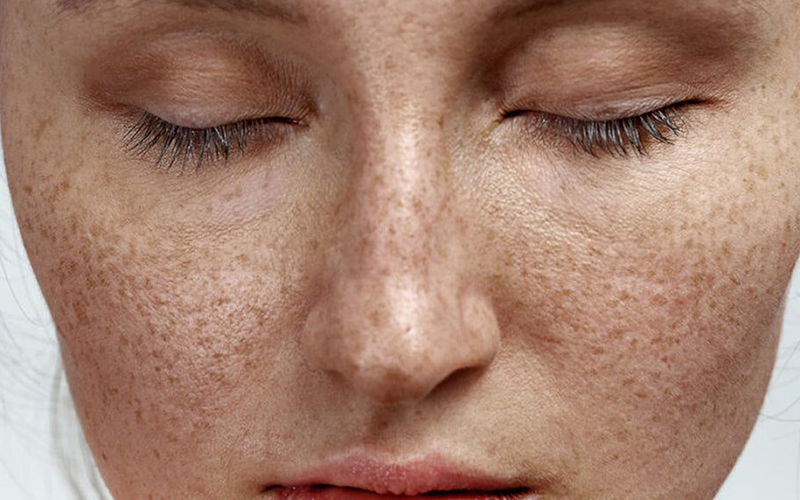
Why brown patches are often misread
In Hyderabad's strong sun, most people get some darkening of the face, especially on the forehead, cheeks and nose. Many assume it is a tan that will go away. Sometimes it is, but patches that stay for months, or keep coming back, are often melasma or another type of pigmentation that needs a different approach.
Tan: what it looks like
- Even darkening over areas exposed to the sun, with a clear line at the collar, sleeves or straps.
- Appears after days in the sun and fades over weeks once the skin is protected.
- Usually affects the arms, neck and hands as well as the face.
Melasma: what it looks like
- Light to dark brown patches with irregular borders, often matching on both sides of the face.
- Common on the cheeks, forehead, upper lip and the bridge of the nose.
- More common in women, and can start or worsen with pregnancy, hormonal pills or thyroid changes.
- Darkens quickly with sun and heat, and tends to return after it lightens.
Other causes of dark patches
Dark marks left after acne or a rash (post-inflammatory pigmentation), sun spots, freckles, reactions to perfumes or cosmetics, and pigmentation from certain medicines can all look similar. Some need treatment of the underlying cause first.
How a dermatologist tells the difference
The dermatologist looks at the pattern and colour of the patches, asks how long they have been there and what makes them worse, and reviews your skin products, medicines and hormonal history. A dermoscope, a handheld magnifying light, or a Wood's lamp examination can show how deep the pigment sits in the skin, which helps in choosing treatment.
Why the right diagnosis matters
A tan only needs sun protection and time. Melasma needs daily sun protection, prescription creams and sometimes procedures, chosen carefully because harsh treatments can make it darker, especially in Indian skin. Using strong lightening creams without a diagnosis is one of the most common reasons pigmentation becomes harder to treat.
Everyday steps that help both
- Use a broad-spectrum sunscreen every morning, including on cloudy days, and reapply when outdoors.
- Add a cap, umbrella or dupatta in the midday sun.
- Avoid scrubbing, steaming and home remedies such as lemon on pigmented skin.
- Do not use creams that were not prescribed for you.
Frequently asked questions
Can melasma go away on its own?
Melasma linked to pregnancy can fade over months after delivery. In most other cases it lasts for years, lightens and darkens with sun exposure, and needs regular sun protection and treatment to keep under control.
Does sunscreen help melasma if I stay indoors?
Yes. Visible light from windows and some indoor light can darken melasma. A broad-spectrum sunscreen, ideally a tinted one, applied every morning and reapplied when outdoors helps.
Can I use a skin-lightening cream from the pharmacy?
Many over-the-counter and some unprescribed creams contain strong steroids or other ingredients that thin the skin or worsen pigmentation over time. It is safer to have the patches diagnosed and use treatment chosen by a dermatologist.
How long does a tan take to fade?
A simple tan usually fades over four to eight weeks once the skin is protected from further sun. If patches are still there after two to three months, they are probably not just a tan.
Consult a dermatologist in Hyderabad
If you are unsure what is causing the patches on your face, Dr. Alekya Singapore, Board-Certified Dermatologist, can assess them at The Skin Sensé. Read more about pigmentation treatment in Hyderabad.
Location: Road No. 12, Banjara Hills, Hyderabad
Hours: Mon–Fri 10 AM – 5 PM, Sat 10 AM – 4 PM