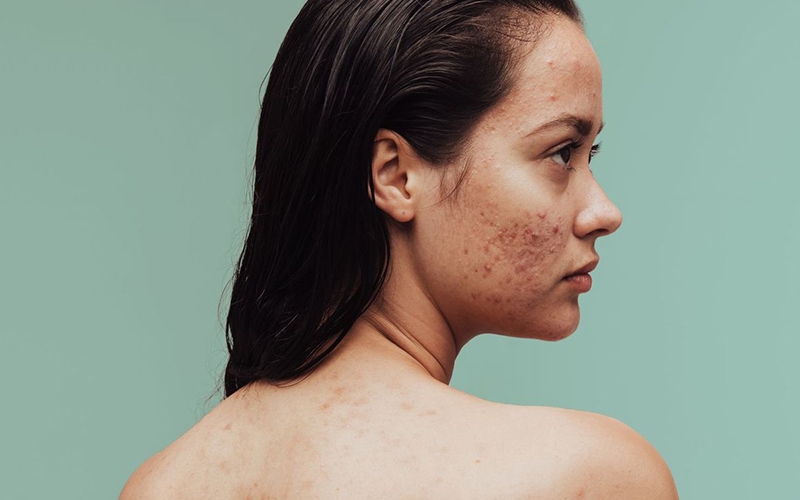
Once acne settles, many people are left looking at the marks it leaves behind and wondering which treatment will help. The honest answer is that it depends on what kind of mark you have. A flat brown spot, a shallow wave in the skin and a deep narrow pit each need a different approach, and the first step is telling them apart.
Marks or scars? The first question
Flat red or brown marks that stay after a pimple heals are usually post-inflammatory pigmentation, not scars. They sit level with the skin, often fade over months with strict sun protection, and respond to prescribed creams and peels. True acne scars change the surface of the skin: you can see a dip or shadow, especially in side lighting, and makeup does not hide them well.
The main types of acne scars
- Rolling scars – broad, shallow waves caused by bands of tissue pulling the skin down from below.
- Boxcar scars – wider depressions with sharper edges, common on the cheeks and temples.
- Ice-pick scars – narrow, deep openings that look like large pores.
- Raised scars – thickened scars, sometimes on the jawline, chest or back, which need a different plan altogether.
Most people have more than one type, which is why a single treatment rarely suits everyone.
Why one treatment doesn't suit everyone
Each option works on a different part of the problem. Fractional laser and microneedling encourage new collagen and improve overall texture. Subcision releases the bands that pull rolling scars down. Targeted chemical treatment can narrow ice-pick scars, and in selected cases a filler lifts a soft depression. A dermatologist usually combines two or more of these, chosen for your scar types, skin tone and how much downtime suits your routine.
Skin tone matters too. Indian skin can darken after aggressive treatment, so settings and spacing between sessions are chosen carefully, and sun protection before and after is part of the plan.
When to start treatment
Scar treatment works best once active acne is under control. If breakouts are still appearing, the first step is treating the acne itself, because every new pimple can leave a new mark. Starting scar procedures too early also makes them less comfortable and less effective.
How many sessions, and what to expect
Improvement is gradual. Many people need three to six sessions spaced four to six weeks apart, and collagen keeps remodelling for months after the last one. The realistic goal is smoother skin and less visible scarring, not complete erasure. Mild redness or swelling for a few days is common after most procedures, and your dermatologist will tell you what to expect before each one.
Everyday care that protects your results
- Use a broad-spectrum sunscreen every morning and reapply when outdoors.
- Do not pick or squeeze pimples; it deepens scarring.
- Avoid harsh scrubs and home remedies on treated skin.
- Follow the aftercare you are given between sessions.
Frequently asked questions
Can acne scars be removed completely?
Most scars can be made much less visible, but complete removal is rarely realistic. The aim is smoother texture and less shadowing, reached gradually over several sessions.
How many sessions will I need?
It depends on the scar type and depth. Many people need three to six sessions spaced four to six weeks apart, and deeper scars may need a combination of treatments.
Can I treat scars while I still get pimples?
Active acne should be controlled first. New breakouts create new scars and can make procedures less comfortable and less effective.
Are dark marks after pimples also scars?
Usually not. Flat brown or red marks are post-inflammatory pigmentation and often fade with sun protection and the right creams. True scars change the skin surface.
Consult a dermatologist in Hyderabad
If you would like to know which treatment suits your scars, Dr. Alekya Singapore, Board-Certified Dermatologist, can assess your skin at The Skin Sensé and explain your options.
Location: Road No. 12, Banjara Hills, Hyderabad
Hours: Mon–Sat 10 AM – 5 PM